The College website’s redesign and move to WordPress over the Winter Break meant BIG CHANGES for the Library’s website. One of the biggest and best changes was the integration of a new blog with the library’s web presence. As a result of this new development, we will no longer be updating Beyond the Bookshelves, this blog. Instead, you can follow the library’s NEW BLOG. There you’ll find the same news, announcements, and opinions from your favorite librarians you’ve come to enjoy here. Take a look and go ahead and follow us!
Happy Birthday Rosa Parks!!
February is Black History Month, and while we all take time to recognize and reflect upon our nation’s history, present, and future, we can also make Black History Month come alive thanks to the Library of Congress. Today (February 4) would have been Rosa Parks’ 102nd birthday, and surely not by coincidence, an exhibit of her letters and photographs opens at the Library of Congress.
Selections from the 10,000 item collection will be available for public viewing on the first floor of the Library’s Thomas Jefferson Building from March 2 – 30, and then will be included in the current exhibition The Civil Rights Act of 1964: A Long Struggle For Freedom, which is open through September 12, 2015 on the second floor of the Thomas Jefferson Building. Both exhibits are open Monday – Saturday from 8:30 AM – 4:30 PM.
Pictures of some of the items are available here from The Guardian (full article here) and just from these few pictures, the breadth of the collection is astonishing: there are images of poll tax receipts, a Presidential Medal of Honor, a pancake recipe, and even a letter complaining about not being allowed in the library. Rosa Parks’ act of refusing to give up her seat on the bus is well-known throughout our country – it is rightfully regarded as a seminal moment in not only the civil rights movement, but the whole of U.S. history. To be able to see her thoughts and words in her own handwriting provides a stark perspective of what led her to strike one of the first blows against Jim Crow. Looking at and reading these documents allows us to appreciate the immense significance and courage of her actions – not just on that day in December 1955, but in the ensuing decades until her passing in 2005.
If you can’t make it up to D.C. to view the exhibit, fear not – the Library of Congress will be posting some of the collection online later this year. And you can always check out some of the SMCM Library’s materials about Rosa Parks and the larger U.S. civil rights movement.
O Privacy, Where Art Thou?
A violation of privacy
A very disturbing discovery has been made. The software used by the St. Mary’s library, University System of Maryland and Affiliated Institutions (USMAI) libraries, and countless other academic and public libraries to lend ebooks is knowingly violating users’ privacy.
As documented in Ars Technica, Adobe Digital Editions tracks and compiles data on which ebooks users download and read, and exactly what each user does with those books. Worse yet, Adobe is sending that information to its servers in plain text, using unencrypted channels, so just about anyone could access that information. Nate Hoffelder of The Digital Reader made the discovery on October 6, 2014, but the violation is believed to have started with the release of Adobe Digital Editions 4.0 in early September.
How it works
Adobe Digital Editions is used by many libraries as a PDF reader for ebook lending to control the digital rights management (DRM) on all borrowed ebooks. This software is essentially what “returns” a borrowed ebook when the loan expires by removing it from a borrower’s computer. Most ebook publishers require a DRM as part of the licensing or sales agreement to ensure intellectual property rights are not violated by end users.
Our reaction
Librarians are furious. As you may recall from when Edward Snowden leaked the NSA’s secrets, librarians value their patrons’ privacy and take every possible precaution to ensure privacy is maintained. The American Library Association (ALA) has issued this statement and the Library and Information Technology Association (LITA) has published this blog post in reaction to the news. Quoted from the ALA statement:
In response to ALA’s request for information, Adobe reports they “expect an update to be available no later than the week of October 20” in terms of transmission of reader data.
Here at St. Mary’s, we will be keeping a close eye on the situation.
Update 10/29/2014:
Adobe made available a software update on Friday, October 24th which includes an encryption mechanism so all user data gathered by and sent to Adobe’s servers is no longer transmitted in plain text. ADE users can download the update (and read Adobe’s privacy statement) here. The American Library Association issued a statement on October 27, 2014 and Nate Hoffelder of The Digital Reader published an update on the privacy breach on October 23rd.
Books for Sale!
 The annual library book sale is next week, October 7-8. We will be selling books on Tuesday and Wednesday from 9-4, rain or shine outside the entrance to the library. We have books in a range of subjects and movies on DVD. (Sorry, we have no VHS tapes.) This year’s featured collections include mid-20th century popular fiction and cookbooks.
Book Prices are $0.50 for paperbacks and $1.00 for hardcovers.
What We Read this Summer
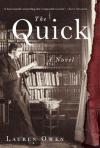
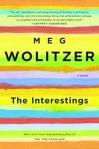
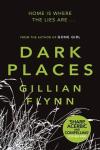
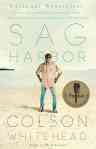
Library Summer Reading 2014 was a huge success. Not only were there seventy-eight reviews submitted and five readers winning the bag of swag for submitting 10 or more reviews; the mix of books reviewed were the most diverse since library summer reading began. There is something for everyone from beach reads to bestsellers, mysteries, non-fiction, comics & graphic novels and all the dystopias you could want.

And then there are the movies. We have our share of books-to-film including Dark Places, Divergent, The Fault in Our Stars and Beautiful Ruins. Read a review of California, the book Stephan Colbert made famous or Margaret Atwood’s classic, The Handmaid’s Tale (do yourself a favor and skip the film.) Looking for a laugh? Try Hyperbole and a Half or The Hitchhikers Guide to the Galaxy.
The Eleasticity of Memory
Guest Blog Post (2 of 3) written by
Taylor Schafer, SMCM ‘2015, Sullivan Scholar, Summer 2014
This summer, aside from my internship in the Archives, I have been conducting interviews with alumni for my St. Mary’s Project–some of which I have chosen to transcribe and donate to the SlackWater collection. My SMP interviews have proven to be a great training ground for my oral history interviews, especially when it comes to understanding exactly what it is that oral history interviews do: they gauge people’s memory about a certain time, place, or event. This concept seems simple and straightforward, however, the hidden complexity of memory becomes more apparent when you ask 40 people the relatively same set of questions. My SMP interviews have all focused on the same thing: the 7 Wonders of St. Mary’s. (Church Point, the Hidden Grave, the Garden of Remembrance, Freedom of Conscience Statue, St. John’s Pond, the Bell Tower, and the Shoe Tree.)

St. John’s Pond. Which may, or may not, have been dyed green in the 1970s
One particular example from my interviews got me thinking about how people recall their memories. I was interviewing a 1974 graduate of the College who had mentioned that one year for St. Patrick’s Day, he and some friends had dyed St. John’s Pond bright green using the same environmentally-friendly dye that is often used to track currents in bodies of water. Several other alumni from that same era vividly recalled the same incident happening as well. There were a few alumni, however, who not only could not recall such a prank occurring but they also assured me that something like that would not have happened back then. Whether it was because of the newer surge of environmental awareness of the 1970s or the fact that they claimed they would have remembered such a visible prank, the strongly opposing answers surprised me.
But this instance made me realize that the information I’ve received about the various landmarks and traditions of campus has heavily relied on how people remember their time at St. Mary’s. While some people had vivid memories of this certain specific occurrence, others relied on their characterizations of their St. Mary’s experience to explain their absence of memory. In other words, it seems like the attitudes and values of the interviewees shape their concrete memories. For example, one alum characterized St. Mary’s students in the 1970s as environmentally conscious, meaning they would not have engaged in such behavior as to dye the pond green for a laugh or to celebrate a holiday. Other alums recall them being very connected to the campus and student life, therefore they would not have missed such an occurrence. This phenomenon occurred several times throughout my interviews, which was an important lesson for me to have learned while learning to conduct oral histories. This is not just specific to St. Mary’s either; it can be applied to any oral history project.
Next week, for the last of three Blog posts, I will write about interviewing former college presidents Joe Urgo and J. Margaret “Maggie” O’Brien. This post will also have a link to the interview transcripts.
Get Your Public Library Card Today
 September is Library Card Sign-up Month and here in St. Mary’s county we celebrate with a library card sign-up swap. For two weeks in September the college library and the public library have a registration swap. Students, faculty and staff at SMCM can sign up for a library card for the St. Mary’s Public Library on campus at the library circulation desk. St. Mary’s County residents can sign up for a SMCM library card at their local branch library.
What do you get with a public library card? Access to COSMOS the gateway to the libraries of Calvert, Charles and St. Mary’s counties print and online materials. That’s a lot of popular reading material, newly released movies and online tools like Mángo Languages. Now you can practice Spanish from your bedroom with a St. Mary’s County Public Library Card.
Sullivan Scholar works in the St. Mary’s Archive over the summer
Guest Blog Post (1 of 3) written by
Taylor Schafer, SMCM ‘2015, Sullivan Scholar, Summer 2014
Hello archive followers! My name is Taylor Schafer. I am a rising senior and I have been interning in the SMCM Archives all summer. This is the first of three Blog posts.
The Archives is located in the basement of Calvert Hall and houses collections of artifacts, newspapers, photographs, letters, and publications relating to both St. Mary’s College and St. Mary’s County history. One of the main areas where College and County history interact is the SlackWater Oral History Collection. My task this summer was to add to this resource by conducting and transcribing interviews of local residents and community leaders, alumni, and longstanding faculty or staff who all have had an impact or were a witness to certain time in local history. In addition, I have been working on my St. Mary’s Senior Project (SMP) this summer, which involves conducting interviews with alumni, faculty, and staff. My project topic focuses around students traditions through the years and the 7 Wonders of St. Mary’s. The interviews I have been doing are helping to piece together the social history of St. Mary’s, which I hope to help publish with my completed SMP.
My main responsibilities this summer have included brainstorming and reaching out to potential interviewees, preparing for interviews, conducting interviews, transcribing interviews, following up with interviewees if needed, and organizing transcribed interviews for the SlackWater website and preserving the audio files. I have conducted some interviews on campus and have also travelled as far as Prince George County for others. Over the past nine weeks, I have transcribed over 220 pages of interviews, conducted ten interviews, some of which include with former College president Joe Urgo, Jayson Williams ‘03, Trinity Episcopal Church Rector John Ball, and Executive Director of Three Oaks Center Lanny Lancaster. I have had several learning opportunities this summer in the Archives besides learning how to conduct oral history interviews.
Of course, working in the archives, I’ve learned a large amount of content about St. Mary’s history as well. There’s so much history housed in the Archives that most community members do not realize. For instance, did you know that a 1900 graduate, Emily Louise Clayton Bishop, studied sculpture with Auguste Rodin and has artwork in several museums? How about that famous sculptor Hans Schuler designed and sculpted the Freedom of Conscience statue in 1935, and his son, Hans Schuler Jr., carved the College seal in 1970? There is so much fascinating St. Mary’s history to be uncovered in regards to the College and region. My work in the archives this summer has helped me not only realize that but also contribute to that material.
Next week I will write a Blog Post about memory and oral history interviews. The following week I will touch upon the interviews with former presidents Joe Urgo and Jane Marget (Maggie) O’Brien, and transcripts of these interviews will be made available to the public.
Welcome Back!
Welcome to the start of another amazing academic year at St. Mary’s. You may not realize it, but by this time the librarians and library staff have had enough of the quiet summer days and are so very excited to see you again! If you’re a student, come by the library to say hello in between classes, and while you’re here you can:
- Check out a laptop if your computer is on the fritz during the first week of classes.
- See what your professor has placed on Course Reserve for the semester.
- Print out your syllabi for the semester.
- Start digging in to your SMP lit review (if you’re at that point)!
For faculty, don’t forget that the library
- Has an all-campus subscription to both The Chronicle of Higher Education AND The New York Times. For full access to content, you just need to register with your St. Mary’s email address.
- Is still taking requests for Course Reserves. You can find the online forms for Course Reserves requests on the Portal under the Faculty Tab.
- Has librarians who can teach research workshops for you this semester. Just ask us.
See you soon.
A photo tribute to Celia on her last day at work
Today, Friday the 27th of June, is Celia Rabinowitz’s last day at the SMCM library. In the five years I have worked with her I have seen many sides of Celia, only some of which you may have seen . . .
Celia checking out books

feeding students in the library


making speeches


admiring cake

and opening presents.


All this happened in the library at one time or another and so we wish her goodbye, from the library.
 Beyond the Bookshelves